

Architecture in Ethiopia spans nearly 3,000 years. Its oldest standing structure, the stone tower at Yeha, dates to the 8th century BC. Its capital, Addis Ababa, now holds the tallest building in East Africa.
Between the two lie Aksum's carved stelae, the rock-hewn churches of Lalibela, the castles of Gondar, the walled town of Harar, a wide range of traditional houses, and a century of modern building in Addis Ababa. This article traces that history period by period.
Timeline at a glance
| Period | Date | Key buildings |
|---|---|---|
| Pre-Aksumite | 8th c. BC | Stone tower at Yeha |
| Aksumite | 3rd–6th c. AD | Stelae of Aksum; Debre Damo monastery |
| Zagwe | 12th–13th c. | Lalibela's eleven churches; Yemrehanna Krestos |
| Harar | 13th–16th c. | Jugol city wall and gates |
| Gondarine | 17th–18th c. | Fasil Ghebbi royal compound |
| Early Addis | 1886–1936 | Imperial Palace; St. George's Cathedral; Taitu Hotel |
| Italian occupation | 1936–1941 | City master plan; Piazza district |
| Imperial modernism | 1941–1974 | Jubilee Palace; Africa Hall; City Hall |
| Derg | 1974–1991 | Shengo Hall; Meskel Square redesign |
| Contemporary | 2000s–today | African Union headquarters; CBE Tower |
8th century BC – 6th century ADYeha and Aksum
The ruined tower at Yeha, in today's Tigray Region, dates to the 8th century BC. It is believed to have stood in the capital of the kingdom of Dʿmt, and it was dedicated to the moon god Almaqah.
Aksum, which rose centuries later, is best known for its stelae, called hawilt. Each was carved from a single block of stone, and many are decorated to look like multi-storey buildings, with false doors and windows. Large tombs, such as the Tomb of the False Door, lie beneath or near them.
Stele 2, often called the Aksum Obelisk, is about 24 m tall and weighs about 152 tonnes. It dates to the 3rd or 4th century AD. Italian troops took it to Rome in 1937. It was returned to Ethiopia in April 2005 and re-erected on its original site in 2008.
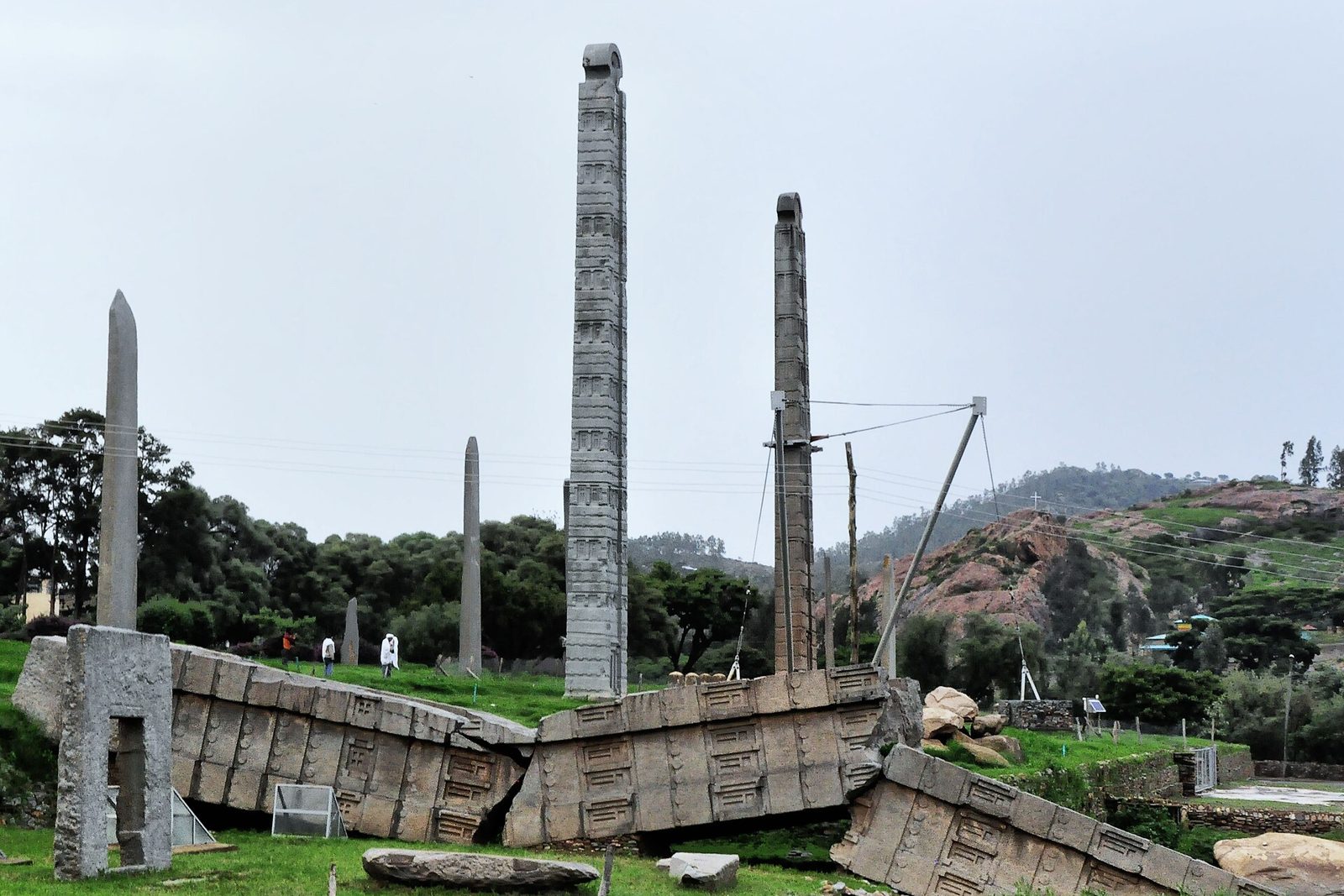
The largest, the Great Stele, measured about 33 m. It now lies broken on the ground and probably fell during or soon after it was raised. It is often described as the largest single-stone structure people ever tried to erect.
Aksumite builders also had a distinctive way of building walls: layers of stone alternating with timber beams. The squared ends of the beams poked out of the wall face, and are known as "monkey heads". The 6th-century monastery of Debre Damo still stands and shows this method.
10th – 15th centuryThe rock-hewn churches
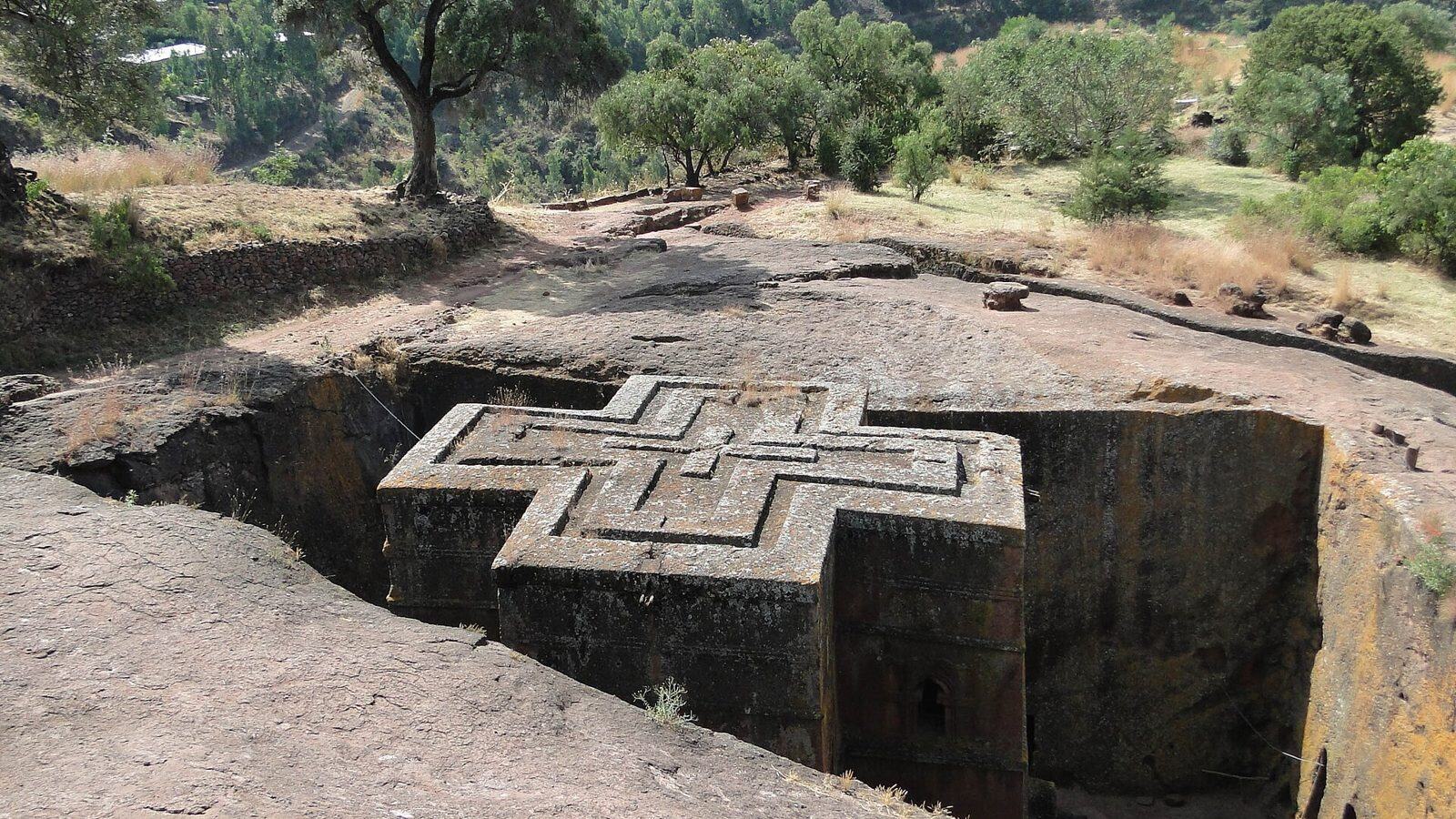
Ethiopia has hundreds of churches cut directly into rock. They were especially common in Tigray around the 10th and 11th centuries.
The best known are at Lalibela, about 645 km north of Addis Ababa. Its eleven monolithic churches were carved from red volcanic tuff. Builders dug trenches around a block of rock, then hollowed it out from the top down. The windows and friezes repeat Aksumite forms. The churches are traditionally attributed to King Lalibela, who ruled in the late 12th and early 13th centuries, and UNESCO listed the site in 1978.
Scholars now think some of the churches were cut at different times over several centuries. The archaeologist David Phillipson has suggested that Bete Gebriel-Rufael was made between about 600 and 800 AD, first as a fortress.
Nearby, the 12th-century church of Yemrehanna Krestos takes a different approach. It was built, not carved, in the Aksumite style. The tradition also spread far south: Adadi Mariam, about 100 km south of Addis Ababa, was cut in the 15th century.
17th – 18th centuryGondar and the castle period
For centuries Ethiopian emperors ruled from moving royal camps rather than one capital. Castle-building began around Lake Tana under Emperor Sarsa Dengel. Emperor Susenyos (r. 1606–1632) used Arab, Gujarati Indian and Jesuit masons alongside local craftsmen, some of them Beta Israel.
Emperor Fasilides made Gondar a permanent capital in 1636. His successors added to the royal compound, Fasil Ghebbi, which is enclosed by a wall about 900 m long. Inside are Fasilides' castle, the palace of Iyasu I, the castle of Empress Mentewab, a library and chancellery of Yohannes I, a banqueting hall of Bakaffa, stables and three churches.
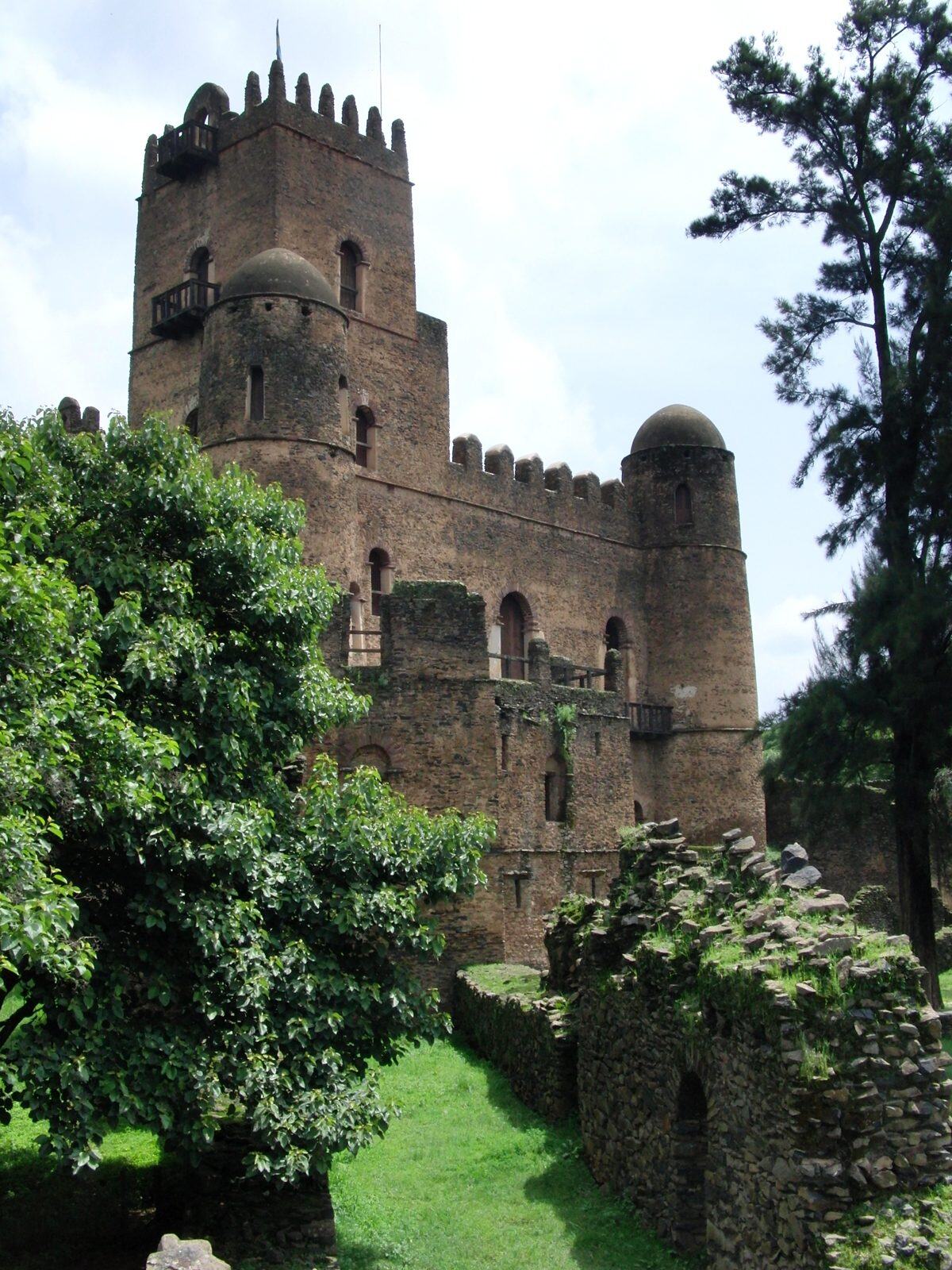
UNESCO describes the style as Indian and Arab influences, later reshaped by the Baroque taste that Jesuit missionaries brought. The site was listed in 1979. Castle architecture was reserved for royalty: a 1684 account describes ordinary houses in Gondar as huts of grass.
13th – 16th centuryHarar Jugol
Harar, in eastern Ethiopia, is enclosed by the Jugol, a wall about 4 m high built between the 13th and 16th centuries. Five historic gates led into the town. A sixth, the Harar Gate, was added in 1889 by Ras Makonnen.
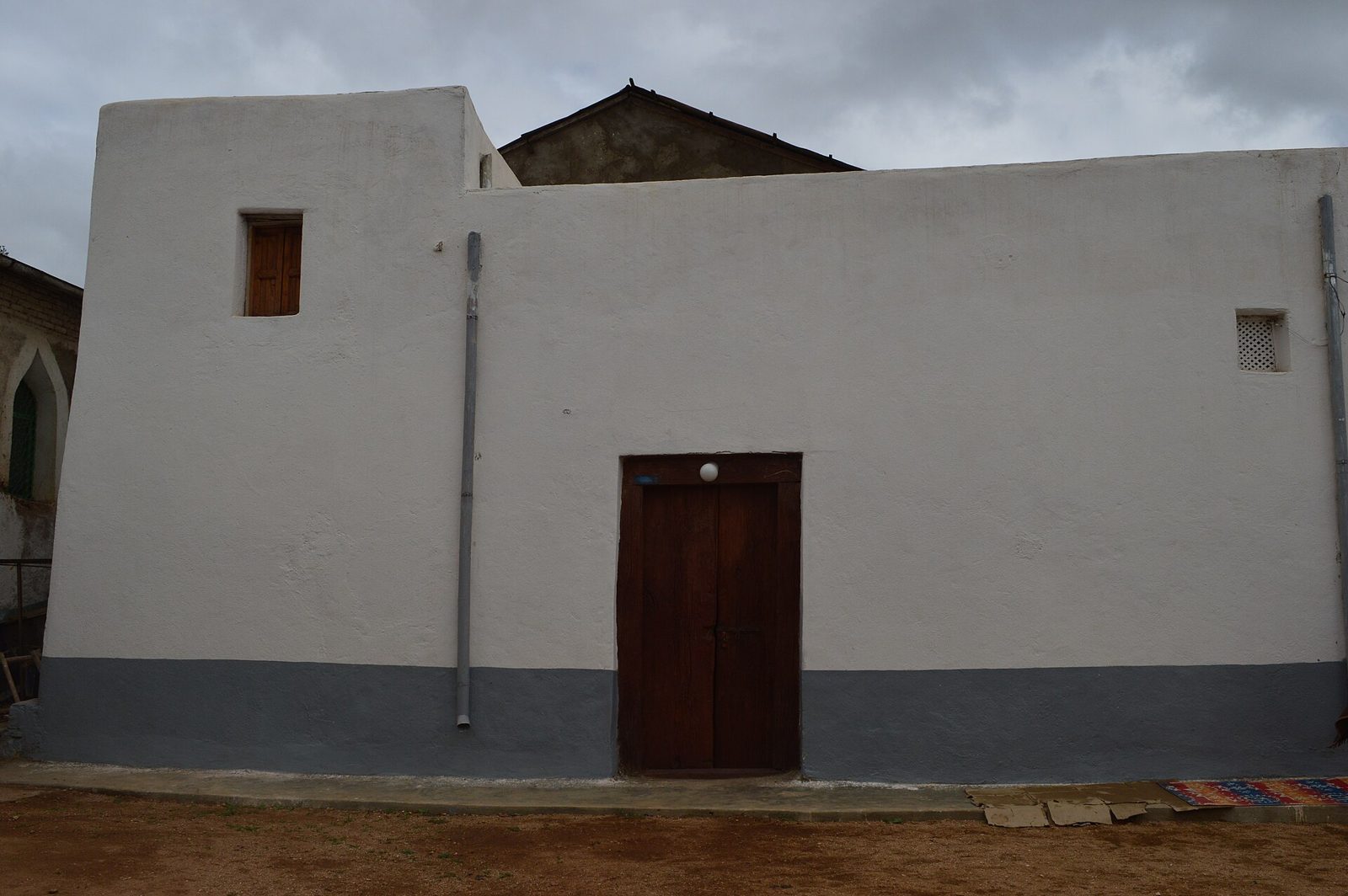
Inside the wall is a dense network of lanes and the traditional Harari house, a type UNESCO describes as unlike the domestic layouts usually found in Muslim countries. Indian merchants later added larger, taller houses with wooden verandas. UNESCO listed Harar Jugol in 2006.
Across the regionsTraditional houses
Ethiopia's regions developed very different house types, each built from local materials.
Hidmo
Stone walls, a wooden ceiling and a flat roof of packed soil. The thick walls and few openings keep the inside temperature steady.
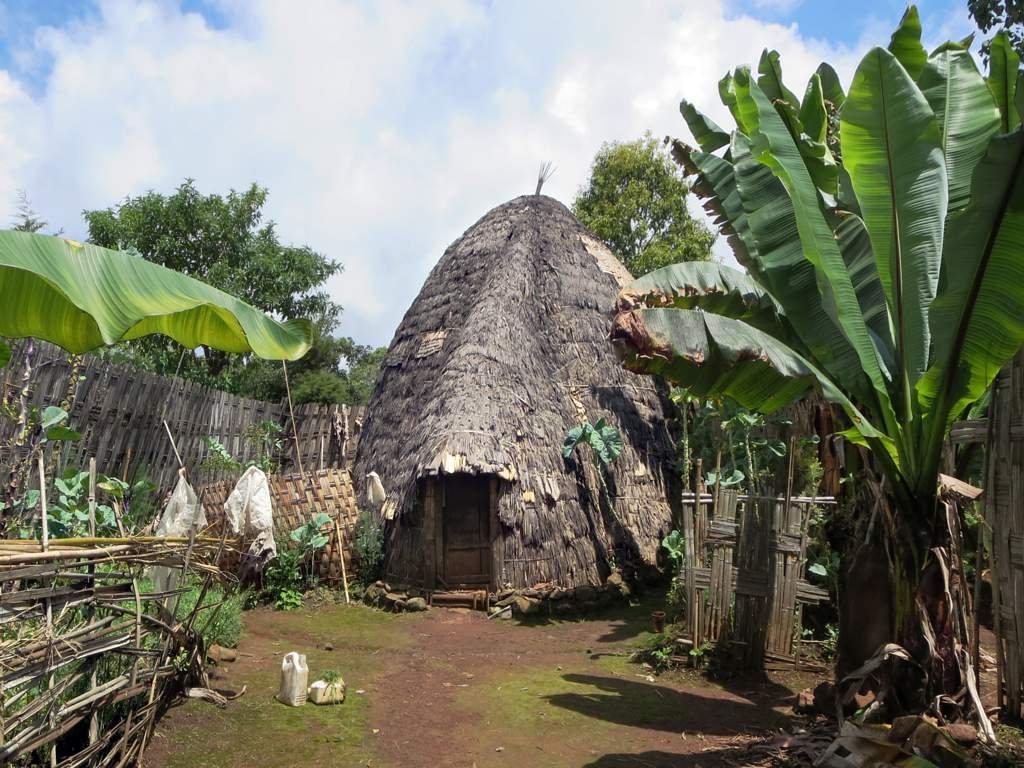
Dorze house
A woven bamboo frame, thatched, up to about 12 m tall when new. As the base rots it is trimmed, so the house slowly lowers and lasts for decades.
Chika house
Round huts with walls of mud and straw on a timber frame, under a thatched roof. Early Addis Ababa was largely built this way.
1886 – 1941Addis Ababa, 1886–1941
Settlement in the valley below Mount Entoto began in 1886. Empress Taytu Betul chose the site and Emperor Menelik II named it Addis Ababa. Menelik built his Imperial Palace there in 1887, and the town became the capital in 1889.
St. George's Cathedral, with its octagonal plan, was founded in 1896. The Itegue Taitu Hotel in the Piazza area was the first hotel in Ethiopia.
Italian forces entered the city on 5 May 1936. A master plan was drawn up by a group of architects that included Le Corbusier. The plan adopted by Ignazio Guidi and Cesare Valle laid out two parallel avenues about 5 km long. St. George's Cathedral was damaged in 1937 and rebuilt after liberation in 1941. The Piazza district still shows the strongest Italian influence in the city.
1941 – 1974Imperial modernism, 1941–1974
In 1946 the British planner Sir Patrick Abercrombie was invited to prepare a new master plan, with neighbourhood units, green parkways and ring roads. The Jubilee Palace, now the National Palace, was built in 1955 for Emperor Haile Selassie's Silver Jubilee.
Africa Hall, designed by Italian architect Arturo Mezzedimi, opened in February 1961 as the headquarters of the UN Economic Commission for Africa. It took about 18 months to build and has a stained-glass window of about 150 m². The Organisation of African Unity was founded there in 1963.
Mezzedimi also designed Addis Ababa City Hall, built from 1961 to 1964 and about 42 m tall. Africa Hall was restored by the Australian firm Architectus in a project of about 11 years. It reopened in 2024 and won the 2026 World Monuments Fund/Knoll Modernism Prize.
1974 – 1991The Derg years, 1974–1991
After 1975 the Derg government nationalised extra rental housing. Its best-known building is Shengo Hall, a new parliament hall made in Finland and assembled in Addis Ababa, described at the time as the world's largest prefabricated building.
Meskel Square, then called Abiyot Square, was redesigned during this period. A new master plan was prepared in 1986 by 45 Ethiopian and 75 Italian experts.
2000s – todayAddis Ababa today
The African Union Conference Center and Office Complex was inaugurated on 28 January 2012. Funded by China at a cost of about US$200 million, its main tower is 99.9 m tall, a reference to 9 September 1999, the date the African Union was founded.
The Commercial Bank of Ethiopia Headquarters, designed by the German firm Henn and built by China State Construction Engineering Corporation, was completed on 13 February 2022. At about 209 m, it is the tallest building in Ethiopia and in East Africa.
Ethiopia's UNESCO World Heritage list includes five architectural and cultural landscapes: Lalibela (1978), Fasil Ghebbi (1979), Aksum (1980), Harar Jugol (2006) and Konso (2011).
Frequently asked questions
How many rock-hewn churches are there in Lalibela?
The UNESCO World Heritage site at Lalibela includes eleven monolithic churches carved from red volcanic tuff. They are traditionally attributed to King Lalibela, who ruled in the late 12th and early 13th centuries.
What is the tallest building in Ethiopia?
The Commercial Bank of Ethiopia Headquarters in Addis Ababa, about 209 m tall, completed in February 2022. It is also described as the tallest building in East Africa.
Who designed Africa Hall in Addis Ababa?
Italian architect Arturo Mezzedimi. Africa Hall opened in February 1961 as the headquarters of the UN Economic Commission for Africa.
Which Ethiopian architectural sites are UNESCO World Heritage sites?
They include the Rock-Hewn Churches of Lalibela (1978), Fasil Ghebbi in Gondar (1979), Aksum (1980), Harar Jugol (2006) and the Konso Cultural Landscape (2011).
Sources
- Wikipedia: Architecture of Ethiopia, Architecture of Addis Ababa, Obelisk of Axum, Fasil Ghebbi, Commercial Bank of Ethiopia Headquarters, African Union Conference Center
- UNESCO World Heritage Centre: Lalibela, Fasil Ghebbi, Harar Jugol, Aksum Obelisk reinstallation
- Shimizu, Tesfay and Miyake, "Fundamentals of Hïdmo in Ïnderta", Nilo-Ethiopian Studies, 2019
- United Nations ECA, Interior Design and The Art Newspaper on the Africa Hall restoration
- African Union press release, 28 January 2012